
The Indian education ministry has undergone a significant reshuffle of top officials, including the removal of higher education secretary Vineet Joshi, amidst widespread controversies surrounding NEET-UG paper leaks and CBSE digital evaluation glitches, with the opposition demanding the resignation of Minister Dharmendra Pradhan.
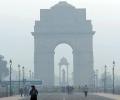
'Most pollution boards across the country have unused funds. There is practically no reason why pollution should not be a political priority.'

The Supreme Court on Wednesday asked the Commission for Air Quality Management (CAQM) to consider directing schools in Delhi-NCR to postpone open air sports competitions planned in November and December to 'safer months' keeping in mind air pollution levels.

Mundane as it may seem, this is in some ways a metaphor for the challenges facing the nation, argue Arvind Subramanian and Devesh Kapur in their new book, A Sixth Of Humanity.
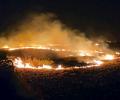
The Supreme Court has expressed concern over the increasing pollution levels during winter and has suggested that the Punjab government arrest farmers who engage in stubble burning. The court believes that this action would send a strong message and help curb air pollution.

Buildings were decorated with colourful lights and earthen lamps dotted houses as people across the country thronged temples and celebrated Diwali with pomp on Monday.

The Supreme Court on Wednesday rapped the Haryana and Punjab governments over non-prosecution of violators found guilty of stubble burning and summoned the state chief secretaries to appear before it on October 23 and submit. an explanation.

The Central Pollution Control Board on Monday reviewed the air quality in Delhi-NCR observing that the contribution of stubble burning may rise in the next five days with the AQI fluctuating between 'very poor' and 'severe' categories.

A severe cold wave has intensified across North India, with Delhi recording its lowest temperature of the season. Rajasthan experienced sub-zero temperatures, and several states have issued alerts and closed schools due to the extreme conditions.

Delhi recorded its coldest January morning in three years with the minimum temperature dropping to 3 degrees Celsius. Cold wave conditions are expected to persist, and air quality has deteriorated to the 'very poor' category.

The Supreme Court has permitted the sale and bursting of green crackers in Delhi-NCR for Diwali, relaxing the ban on green firecrackers as a temporary measure from October 18 to 21. The court has asked pollution control boards to monitor pollution levels and file reports. The order also includes measures to prevent the sale of non-compliant crackers.

According to the Graded Response Action Plan (GRAP), the air quality is considered to be in the emergency category if the PM2.5 and PM10 levels continue to be above 300 micrograms per cubic metre and 500 micrograms per cubic metre respectively for 48 hours or more.

Delhi's air quality deteriorated significantly on Monday, with areas like Dwarka, Mundka and Najafgarh recording an AQI of 500, the worst this season. The city's overall AQI reached 491, triggering the implementation of the Graded Response Action Plan (GRAP) Stage-IV restrictions in Delhi-NCR. Doctors warned of health risks, urging people to wear N95 masks and avoid outdoor activities. The Supreme Court questioned the Delhi government on its anti-pollution measures and warned against scaling down preventive measures without its permission. Delhi Chief Minister Atishi accused the BJP-led central government of political maneuvering while neglecting stubble burning in states it governs. Meanwhile, the city enforced stricter pollution control measures, including a ban on truck entry and suspension of construction activities. Air purifier sales surged, reflecting the public's concern over the severe air pollution.
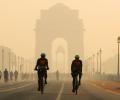
Violation of the provisions entails a punishment of a jail term up to five years or with fine up to Rs 1 crore or with both, the ordinance released by the Ministry of Law and Justice on Thursday said.

Air quality index (AQI) soared past 350 level in parts of Delhi on Thursday and experts cautioned that as weather turns colder it may breach the 400-mark ceiling and enter the 'severe' zone soon, notwithstanding the incidents of stubble burnings which have nosedived from 17,529 in 2020 to 4,262 this year.
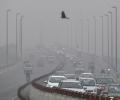
With Delhi recording air pollution levels seven to eight times above safe standards on Monday, the city government announced the return of its flagship odd-even scheme after four years anticipating further deterioration of air quality post-Diwali.
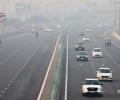
The city's 24-hour Air Quality Index (AQI), recorded at 4 pm daily, stood at 417, making it the worst in the country. On Friday, the AQI level was 396.

The poisonous haze has been causing significant problems for people with existing respiratory issues, according to doctors.

A bench of the NGT, headed by its chairperson Justice Adarsh Kumar Goel, directed that the order will also apply to all cities and towns in the country where the average of ambient air quality during November (as per available data of last year) falls under 'poor' or worse category.

Violation of the provisions entails a punishment of a jail term of up to five years or with fine up to Rs one crore or with both.

Authorities alerted people to avoid staying outdoors and L-G ordered to halt all civil construction activities across the city till Sunday.

Gujarat has topped with a score of 71.14% on ease of doing business list.

Delhi Chief Minister Arvind Kejriwal announced that primary schools will be closed from Saturday in view of spike in pollution levels in the national capital.

Cars with engine capacity of 2000 cc and above will not be registered in Delhi and National Capital Region till March 31, 2016
Besides reviving investor sentiments, Vasundhara Raje's regime has brought reforms in the social sector.

NHRC issues notices to Centre and governments of Delhi, Punjab and Haryana, saying 'the state cannot leave its citizens to die due to the toxic haze.'

Despite the national capital recording its best air quality on Diwali day in eight years, pollution levels may rise due to low night temperatures and sporadic burning of firecrackers though there is a ban on their manufacture, storage, sale and use within the city.

Mercury hovered around 40 degrees Celsius in large parts of the country on Monday as the Indian meteorological department predicted heat wave conditions in parts of east India over the next four days and the northwest region over the next two days.

The Manali-Leh National Highway-3 was blocked after heavy rainfall triggered landslide in Himachal Pradesh's Kullu district on Friday.

According to the Central Pollution Control Board (CPCB), the 24-hour average concentration of lung-damaging fine particles known as PM2.5 in Delhi-NCR shot up from 243 micrograms per cubic metre at 6 pm on Thursday (Diwali day) to 410 micrograms per cubic metre at 9 am on Friday, around seven times the safe limit of 60 micrograms per cubic metre.

13 out of the world's 20 most polluted cities are in India. Most shockingly, the latest Central Pollution Control Board statistics reveal that the pollution levels in Gwalior, Raipur and even little known Kashipur are higher than that of Delhi which means we have some of the most polluted zones in the world.

Sanitation is always clubbed with other departments, which lead to its neglect, says Devanik Saha.

The non-viability of green crackers may pave the way for e-crackers.

At least 12 passengers were killed and two others missing after a Maharashtra state transport bus fell into the Narmada river from a bridge in Madhya Pradesh's Dhar district on Monday, officials said.

A large chunk of the Rs 8.8 lakh crore of investments the Patnaik government had attracted is in uncertain territory.

The state is trying hard to improve ease of doing business by several notches.
